A morning at a small factory
Picture a small manufacturing company. Materials are waiting in the warehouse, a new machine is being installed, and the production manager needs to decide whether to accept another order. A colleague has the technical documents, accounting has the delivery note, and somebody changed the test date in an email. Everyone knows part of the story. Putting it together takes time.
This is the kind of situation we want a digital twin to make clearer. The company is an illustrative example. In the proposed environment, someone could open a digital view of the factory, select the machine and find its status, documents and responsible person. The place would give the information context.
The connections make it useful
A three-dimensional model can show where the machine stands. A useful twin should also help explain why it is not running. Is an inspection missing? Is training still required? Who can confirm acceptance? Each piece of information should show its source, update date and whether it represents a fact, a plan or a simulation.
In our example, the manager could open the acceptance record and see that the final test still needs approval. Sales could then work with the corresponding capacity information. That is the practical benefit we are pursuing: a shorter route from a question to the evidence needed for a decision. It depends on current data and working connections to company systems.
Space, identity and records
Each part has a defined role in the target architecture. BLOCK GENESIS provides the map, data and spatial view. BlockID is intended to connect the identity of a person, company or agent with their role and permissions. Blockchain Genesis is intended to provide the company record through which recorded events and their relationships can be traced.
An accountant needs different information from a service engineer. An agent may prepare a summary or alert only within its assigned task. A designated person remains responsible for approval. Every record also needs reliable supporting evidence: recording a statement does not establish that the machine actually passed its test.
What you can see today
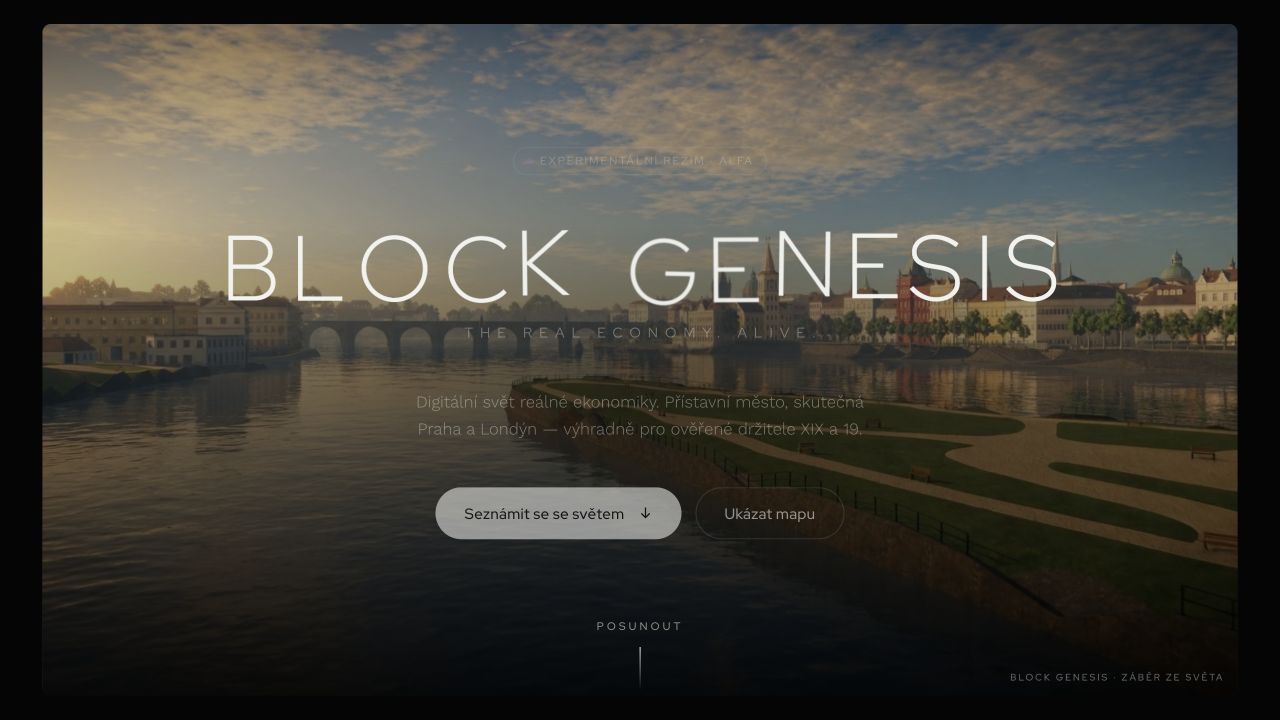
BLOCK GENESIS currently presents an experimental alpha using synthetic data. Its spatial game model combines a harbour city with parts of Prague and London. The Open World demo explores the environment; the website limits entry to verified XIX and 19 holders. A public presentation therefore does not mean unrestricted access to every function.
The BlockID page explains the proposed connection between the app, an agent and the world. It also states that it describes a target architecture, with some functions not yet operating. The available app demonstration contains model data. These interfaces do not establish that the complete production chain already works, from a real machine through accounting to payment.
Less searching. A clearer view.
A digital twin earns its place by helping someone do everyday work. A new colleague learns their way around. An owner finds the cause of a delay. An authorised partner opens the document they need. Sometimes a spatial tour will be quickest; sometimes a simple phone screen. Both views should progressively work with the same information and permissions.
That is why we are developing the environment in stages, checking data, access and connections alongside the world itself. Explore BLOCK GENESIS and the BlockID architecture demonstration. Think of one question about your own company that currently takes several people to answer. That is a useful place to begin.